Select Focus Area
Child Protection
Early Childhood Development
Education
Emergency Response
Environmental Sustainability
Food Security & Livelihoods
Health & Nutrition
Water Sanitation & Hygiene
Youth Development
Select Type
Capacity Statement
Case Study
Collection Stories
Learning brief
Manual, Toolkit or Guide
Policy Brief
Project Brief
Report
Research
Strategic Framework
Select Year
2025
2024
2023
2022
2021
2020
2019
2018
2017
Select District
Chibombo
Chongwe
Countrywide
Mumbwa

2018

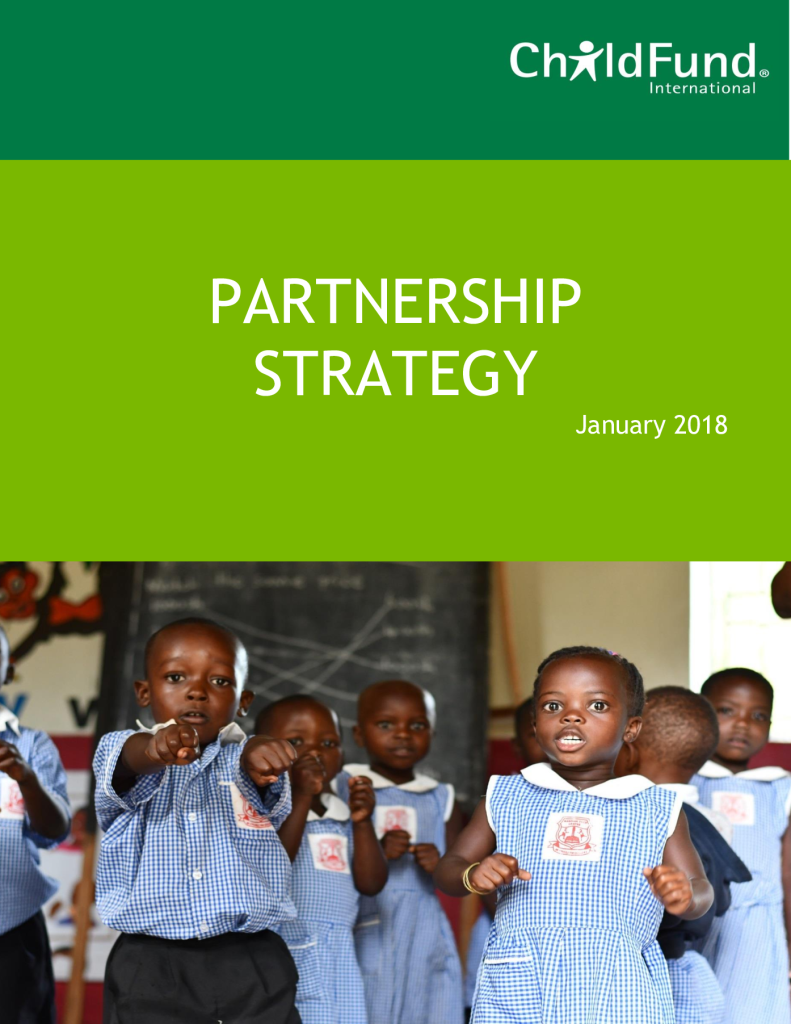
ChildFund has released an updated Partnership Strategy to align more deeply with its core purpose and deliver stronger, more impactful programs for children. Since 2009, ChildFund’s global strategy has emphasized building a strong core program. This update responds to emerging challenges—shifting funding landscapes, increasing local NGO capacity, and a demand for greater program quality and scale. Rooted in the experience of working with local partners across diverse contexts, the strategy sets a clear vision: to build and maintain a fit-for-purpose, purpose-driven portfolio of strong partners that advance child development at the local level and influence change at national and global levels. It reinforces ChildFund’s commitment to long-term, values-aligned partnerships that drive program quality, advocacy, innovation, and sustainable impact

2022

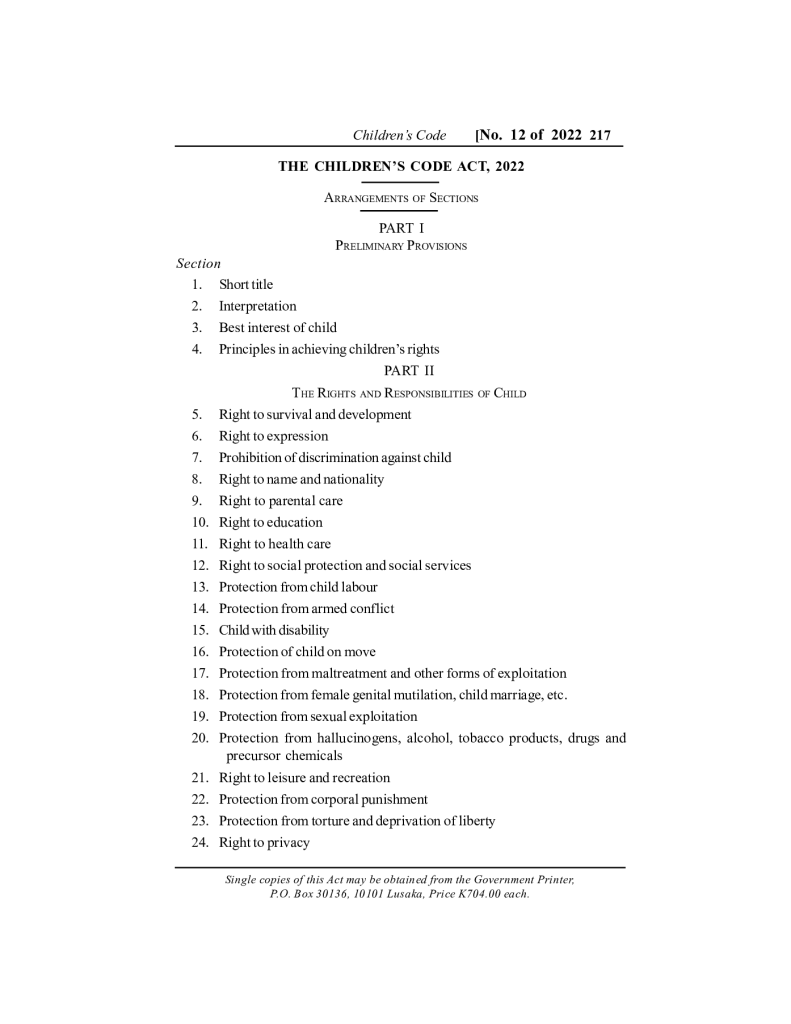
The Children’s Code Act, 2022 consolidates and modernizes laws relating to children by making comprehensive provision for the rights of the child, parental responsibilities, alternative care arrangements such as guardianship, foster care, and adoption, and the protection of children in need of care or in conflict with the law. The Act further provides for the regulation and delivery of child welfare services, establishes the National Child Development Council, and aims to ensure the holistic development, protection, and participation of every child in Zambia.

2025

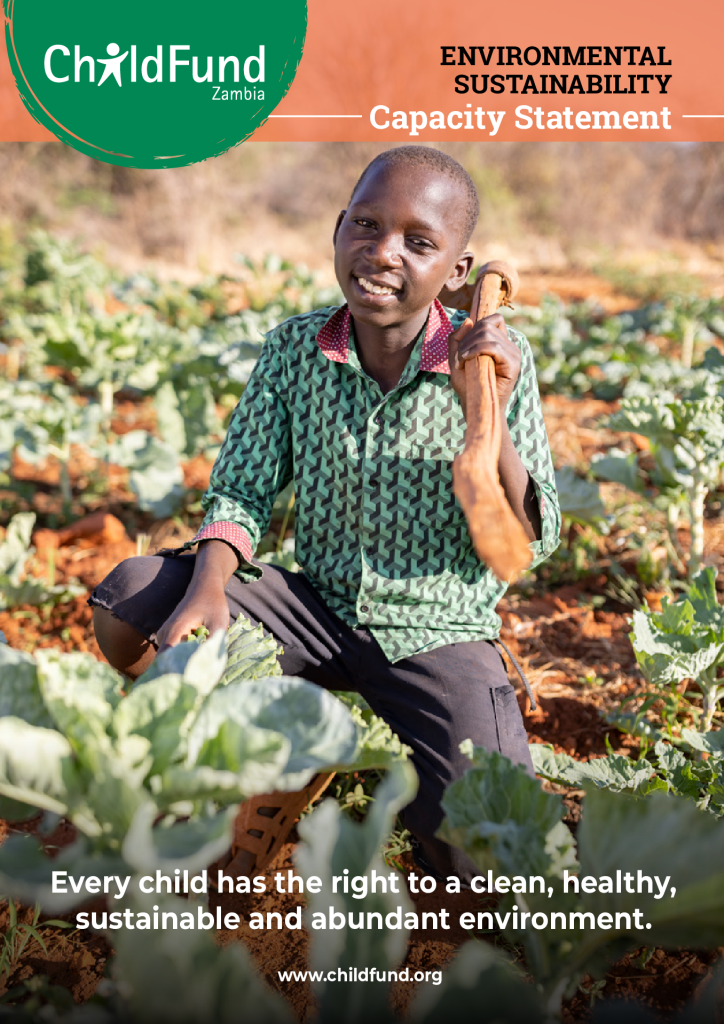
ChildFund is committed to tackling environmental challenges through innovative, child-centered solutions that build community resilience, promote clean energy, and support sustainable livelihoods. This capacity statement outlines our proven approaches, such as smart agriculture, biodigesters, and fuel-efficient stoves, that reduce environmental impact, improve food security, and empower youth as climate leaders. Aligned with Zambia’s NDCs, NAP, and global frameworks like the Paris Agreement and SDGs, our work prioritizes environmental education, green job creation, and locally driven action for lasting change.
2022

This document outlines ChildFund Zambia’s five-year strategic direction, programmatic priorities, and development goals aimed at improving the lives of vulnerable children and their communities across Zambia. This Country Strategic Plan 2022–2026, is a roadmap that reflects the collective vision and efforts of our dedicated staff, local partners, community volunteers, and global stakeholders. This plan guides our work to ensure that every child in Zambia grows up in a free, safe, and nurturing environment.

2023

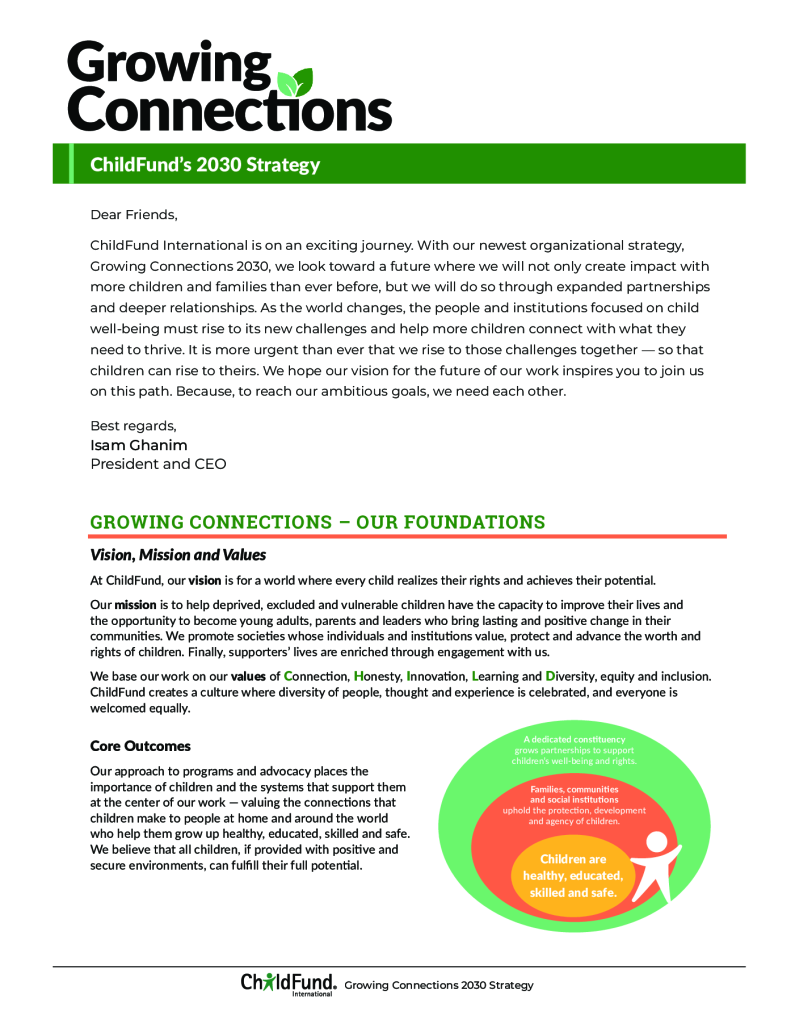
ChildFund International is on an exciting journey. With our newest organizational strategy, Growing Connections 2030, we look toward a future where we will not only create impact with more children and families than ever before, but we will do so through expanded partnerships and deeper relationships. As the world changes, the people and institutions focused on child well-being must rise to its new challenges and help more children connect with what they need to thrive. It is more urgent than ever that we rise to those challenges together — so that children can rise to theirs. We hope our vision for the future of our work inspires you to join us on this path. Because, to reach our ambitious goals, we need each other.

2020

At ChildFund, we characterize our impact in Africa, Asia, and the Americas using four key dimensions: (1) the positive change we see in our core outcomes as measured by performance data — our global monitoring of key indicators and our programming evidence; (2) by the feedback we receive from children, families, sponsors, partners, and stakeholders on how our work with them has made a positive difference in their lives — and in their communities; (3) how we apply learning about what works well and does not work well in our programs and strategies to improve outcomes; and (4) how we contribute to global, collective outcomes for children and their families — the Sustainable Development Goals (SDGs).