Select Focus Area
Child Protection
Early Childhood Development
Education
Emergency Response
Environmental Sustainability
Food Security & Livelihoods
Health & Nutrition
Water Sanitation & Hygiene
Youth Development
Select Type
Capacity Statement
Case Study
Collection Stories
Learning brief
Manual, Toolkit or Guide
Policy Brief
Project Brief
Report
Research
Strategic Framework
Select Year
2025
2024
2023
2022
2021
2020
2019
2018
2017
Select District
Chibombo
Chongwe
Countrywide
Mumbwa

2023

This brief focuses on policy measures and gaps in policies, legislations and standards, governance structures and coordination and programmes and services related to online sexual exploitation and abuse of children in Africa, including Zambia.

2022

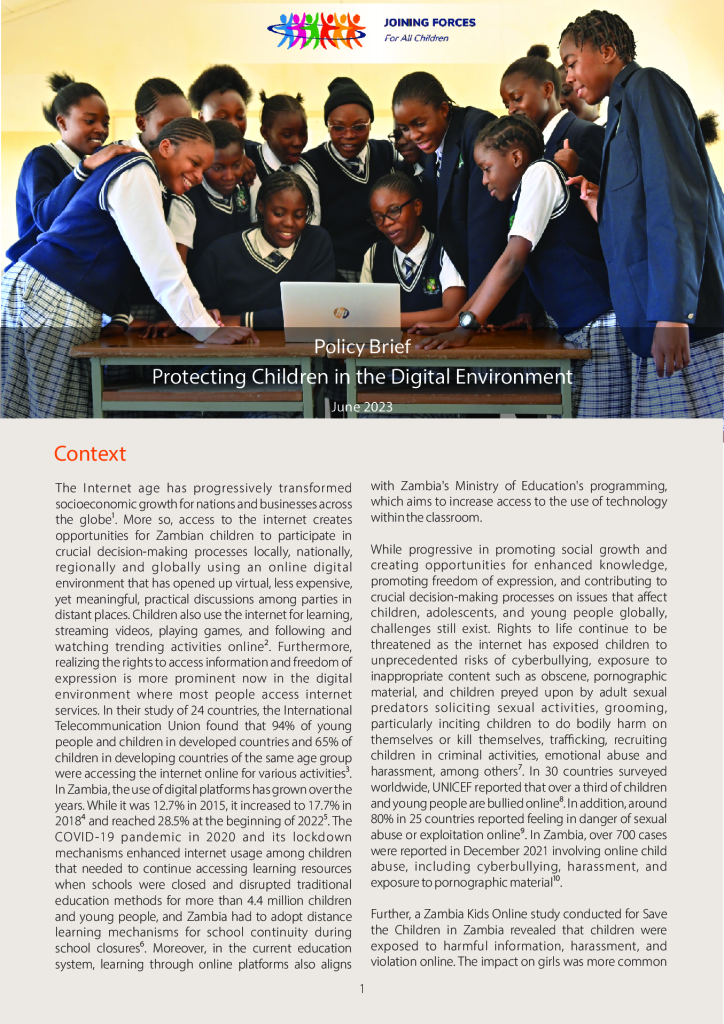
The Joining Forces Alliance came together to launch a new policy aimed at protecting children in Zambia’s rapidly growing digital space. As internet access expands, rising from 12.7% in 2015 to 28.5% in 2022, more children are learning, socializing, and expressing themselves online. This policy seeks to promote safe, inclusive, and empowering digital experiences for every child, ensuring that as Zambia goes digital, no child is left vulnerable. While digital platforms offer new opportunities for education and participation, they also expose children to serious risks such as cyberbullying, sexual exploitation, and harmful content. In December 2021 alone, Zambia recorded over 700 cases of online child abuse.

2023

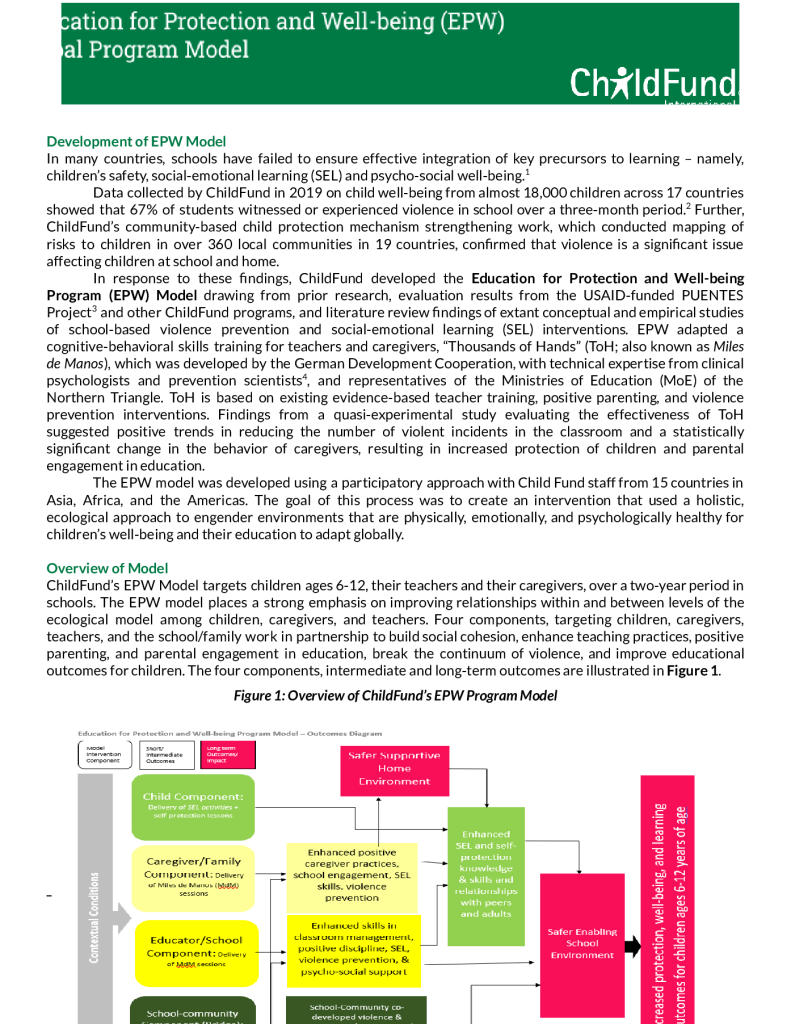
ChildFund’s Education for Protection and Wellbeing (EPW) Program Model targets children ages 6-12, their teachers and their caregivers in schools. The EPW model places a strong emphasis on improving relationships within and between levels of the ecological model among children, caregivers,and teachers.

2024

This policy brief focuses on Zambia’s landmark Marriage (Amendment) Act No. 13 of 2023, which fully prohibits child marriage under both statutory and customary law. Developed by Population Council Zambia in collaboration with ChildFund, the Gender Division, UNFPA, and UNICEF, the brief outlines the implications of this progressive legislation. The Act defines a child as anyone under 18 and voids any marriage involving minors, effectively closing legal loopholes that previously enabled child marriage—especially under customary practices. With penalties of up to 10 years in prison, and life sentences under the Education Act for marrying off schoolchildren, the policy sets a strong legal foundation. However, it also highlights the need for sustained social and cultural change to end child marriage for good

2025

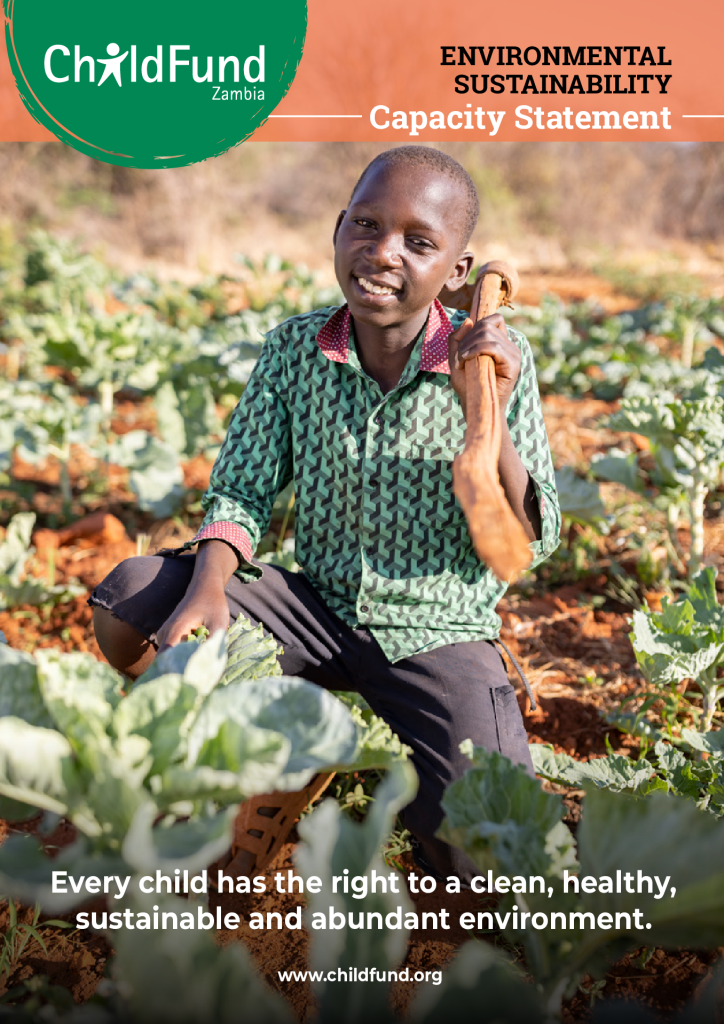
ChildFund is committed to tackling environmental challenges through innovative, child-centered solutions that build community resilience, promote clean energy, and support sustainable livelihoods. This capacity statement outlines our proven approaches, such as smart agriculture, biodigesters, and fuel-efficient stoves, that reduce environmental impact, improve food security, and empower youth as climate leaders. Aligned with Zambia’s NDCs, NAP, and global frameworks like the Paris Agreement and SDGs, our work prioritizes environmental education, green job creation, and locally driven action for lasting change.

2022

This document outlines ChildFund Zambia’s five-year strategic direction, programmatic priorities, and development goals aimed at improving the lives of vulnerable children and their communities across Zambia. This Country Strategic Plan 2022–2026, is a roadmap that reflects the collective vision and efforts of our dedicated staff, local partners, community volunteers, and global stakeholders. This plan guides our work to ensure that every child in Zambia grows up in a free, safe, and nurturing environment.

2023

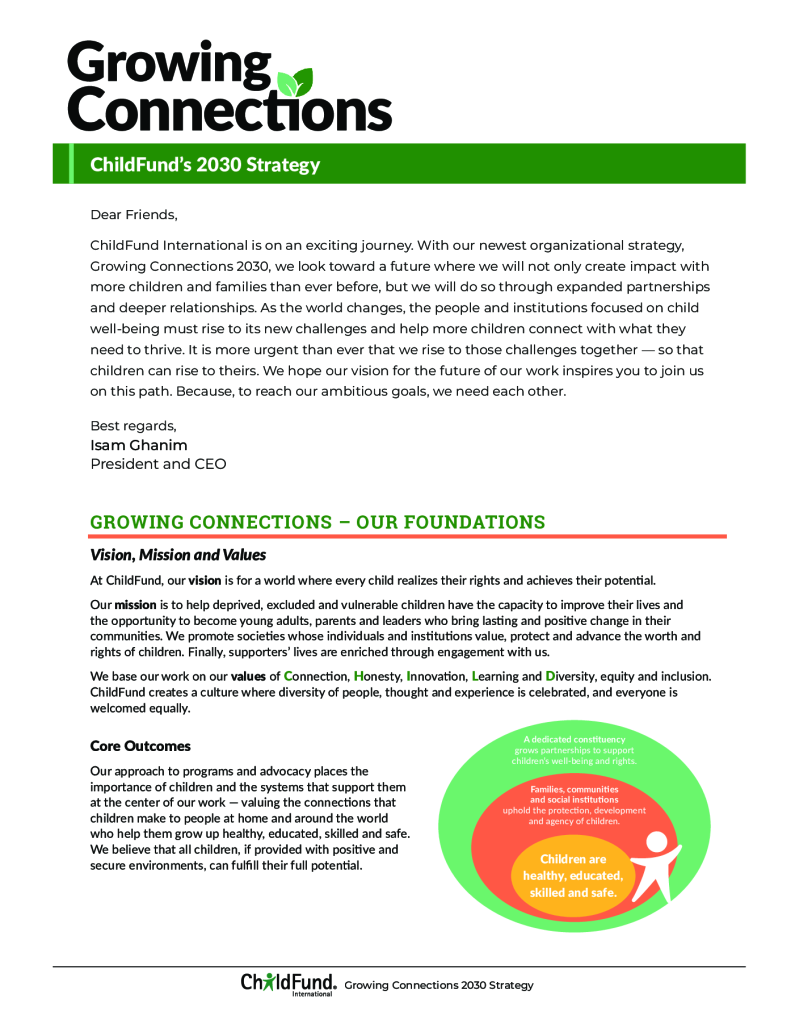
ChildFund International is on an exciting journey. With our newest organizational strategy, Growing Connections 2030, we look toward a future where we will not only create impact with more children and families than ever before, but we will do so through expanded partnerships and deeper relationships. As the world changes, the people and institutions focused on child well-being must rise to its new challenges and help more children connect with what they need to thrive. It is more urgent than ever that we rise to those challenges together — so that children can rise to theirs. We hope our vision for the future of our work inspires you to join us on this path. Because, to reach our ambitious goals, we need each other.

2020

At ChildFund, we characterize our impact in Africa, Asia, and the Americas using four key dimensions: (1) the positive change we see in our core outcomes as measured by performance data — our global monitoring of key indicators and our programming evidence; (2) by the feedback we receive from children, families, sponsors, partners, and stakeholders on how our work with them has made a positive difference in their lives — and in their communities; (3) how we apply learning about what works well and does not work well in our programs and strategies to improve outcomes; and (4) how we contribute to global, collective outcomes for children and their families — the Sustainable Development Goals (SDGs).