Select Focus Area
Child Protection
Early Childhood Development
Education
Emergency Response
Environmental Sustainability
Food Security & Livelihoods
Health & Nutrition
Water Sanitation & Hygiene
Youth Development
Select Type
Capacity Statement
Case Study
Collection Stories
Learning brief
Manual, Toolkit or Guide
Policy Brief
Project Brief
Report
Research
Strategic Framework
Select Year
2025
2024
2023
2022
2021
2020
2019
2018
2017
Select District
Chibombo
Chongwe
Countrywide
Mumbwa

2022

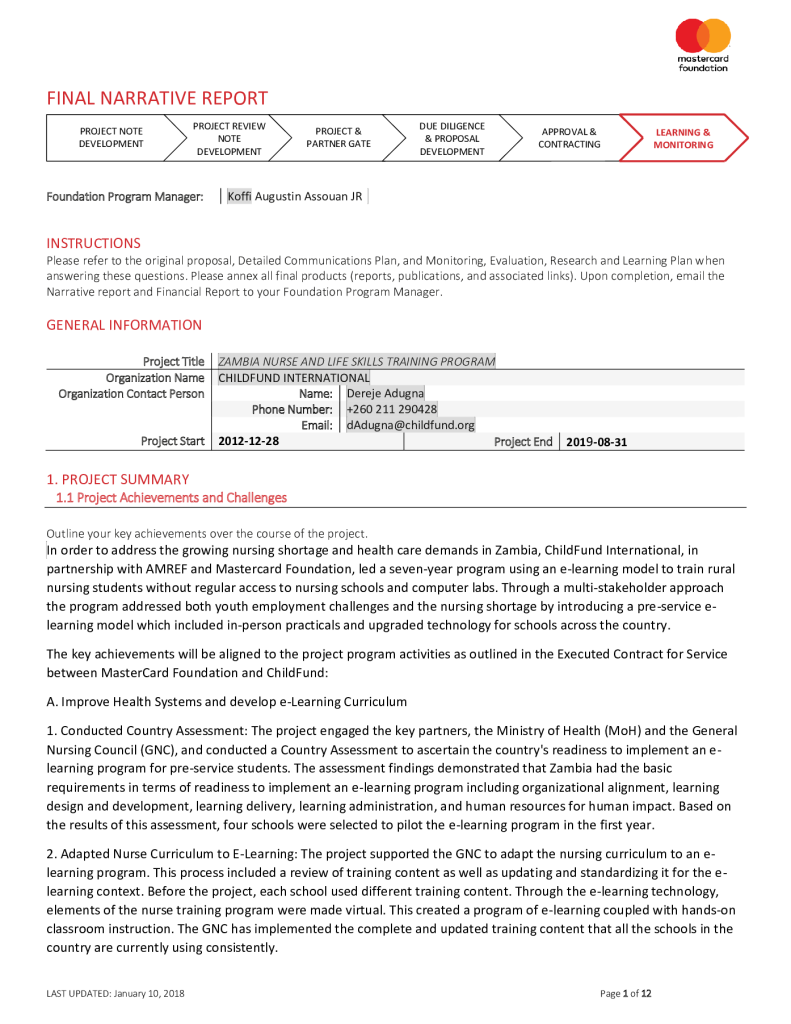
This narrative report highlights the impact and outcomes of the Zambia Nurse and Life Skills Training Program, implemented by ChildFund International in partnership with AMREF and the Mastercard Foundation between 2012 and 2019. The program was designed to address Zambia’s critical nursing shortage while creating employment opportunities for vulnerable youth. Using a blended e-learning model, the initiative successfully trained nursing students across all 10 provinces. In addition to technical nursing education, the program integrated life skills training, scholarships, and infrastructure support to ensure student success and long-term sustainability. Today, the program’s outcomes continue to strengthen Zambia’s healthcare system and serve as a model for public-private collaboration in workforce development.

2023

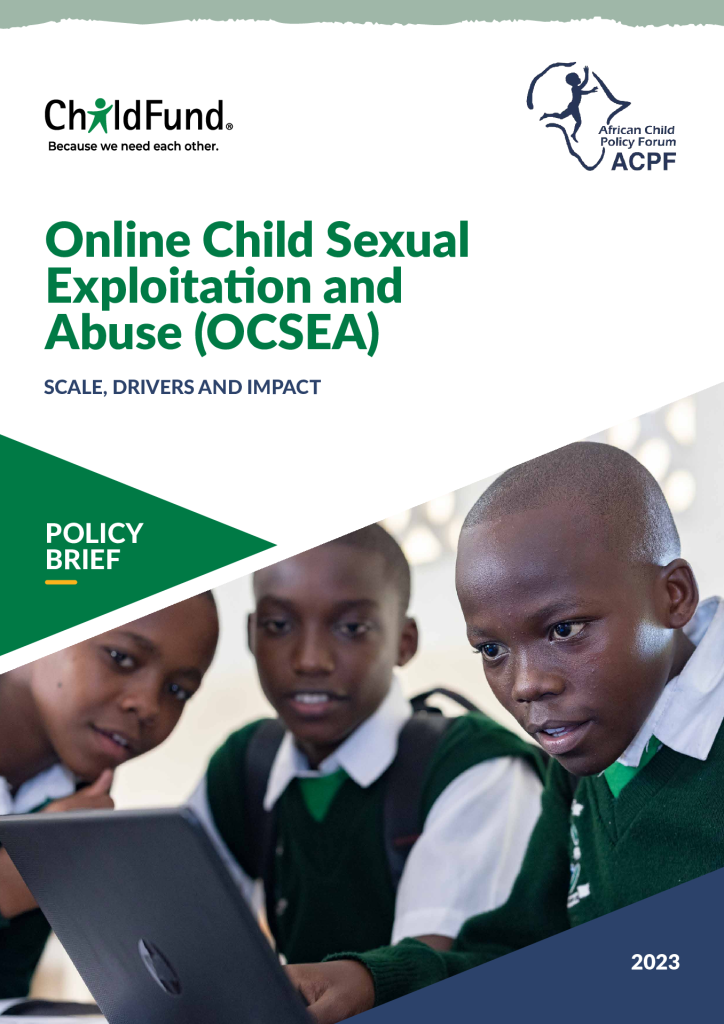
This brief, prepared by African Child Policy Forum, in collaboration with ChildFund, is the first in a series of two Policy Briefs. This series focuses on the nature, scale and impact of the growing problem of technology-facilitated sexual abuse and exploitation of children in Africa, including Zambia.

2021

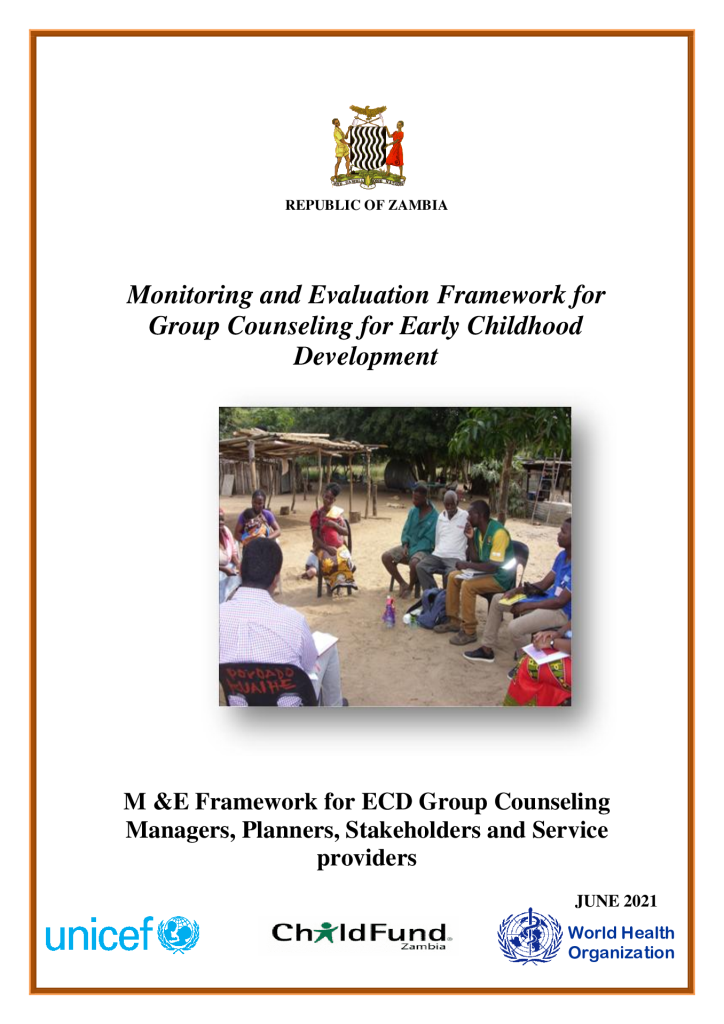
This Monitoring and Evaluation (M&E) Framework provides a structured and consistent approach to tracking the implementation and effectiveness of the Early Childhood Development (ECD) group counseling program. Designed to complement the ongoing individual family counseling services, this framework offers an alternative and scalable approach to delivering ECD counseling through group sessions with caregivers. Our goal is to systematically collect and analyze data to measure performance, inform decision-making, and enhance the quality and impact of ECD interventions. The framework outlines key indicators, sets performance targets, and establishes processes for monitoring inputs, activities, and outputs—ensuring that all stakeholders can assess progress against set objectives. By focusing on efficiency, effectiveness, and behavior change within target communities, this M&E framework supports continuous improvement of the group counseling approach. It also provides evidence on the feasibility and cost-effectiveness of the model, enabling programmatic adjustments and the development of best practice guidelines.

2024

Zambia’s youth are key to sustainable development. With over 5.3 million youth aged 19 to 34, representing nearly 27% of the total population, this demographic holds tremendous potential to drive economic growth, innovation, and national progress. Yet, this potential is threatened by challenges such as high unemployment, limited access to opportunities, and substance abuse. The 2024 National Youth Policy is a bold response to these realities. Anchored in a multi-sectoral approach, the Policy outlines strategic interventions across key sectors including entrepreneurship, education, health, ICT, arts, sport, environmental protection, and youth leadership. Building on the 2015 framework and aligned with Zambia’s Vision 2030, the African Union Agenda 2063, and the Sustainable Development Goals, this Policy envisions a Zambia where every young person is empowered, productive, and fully engaged in national development.

2020

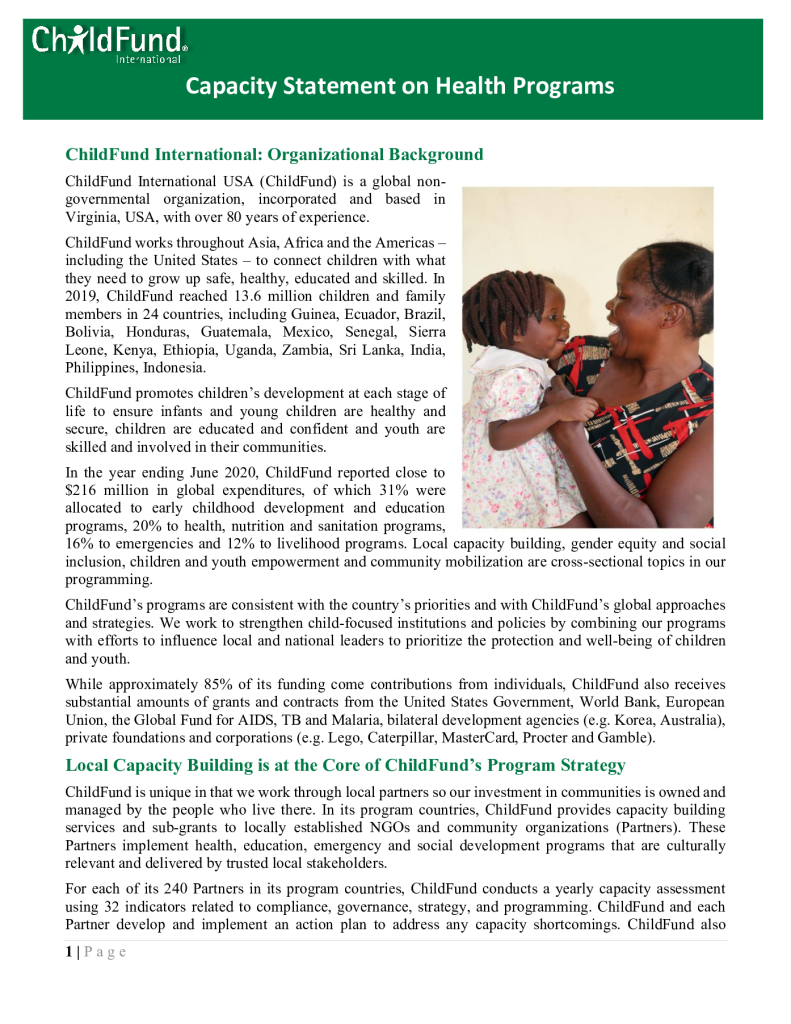
This report highlights ChildFund’s global investments in improving children’s health, nutrition, and sanitation — essential foundations for their overall development and well-being. In the year ending June 2020, 20% of ChildFund’s nearly $216 million in global expenditures was dedicated to health-related programs, reflecting our deep commitment to ensuring that children, especially in their early years, grow up healthy and secure. In addition to health, the report outlines our investments in early childhood development, education, emergency response, and livelihoods — all supported by cross-cutting priorities such as gender equity, local capacity building, youth empowerment, and social inclusion. Aligned with country priorities and rooted in community engagement, ChildFund’s programs aim to strengthen child-focused systems and influence policies that protect and uplift children and youth worldwide.

2023

At ChildFund, we characterize our impact in Africa, Asia, and the Americas using four key dimensions: (1) the positive change we see in our core outcomes as measured by performance data — our global monitoring of key indicators and our programming evidence; (2) by the feedback we receive from children, families, sponsors, partners, and stakeholders on how our work with them has made a positive difference in their lives — and in their communities; (3) how we apply learning about what works well and does not work well in our programs and strategies to improve outcomes; and (4) how we contribute to global, collective outcomes for children and their families — the Sustainable Development Goals (SDGs).

2018

ChildFund has released an updated Partnership Strategy to align more deeply with its core purpose and deliver stronger, more impactful programs for children. Since 2009, ChildFund’s global strategy has emphasized building a strong core program. This update responds to emerging challenges—shifting funding landscapes, increasing local NGO capacity, and a demand for greater program quality and scale. Rooted in the experience of working with local partners across diverse contexts, the strategy sets a clear vision: to build and maintain a fit-for-purpose, purpose-driven portfolio of strong partners that advance child development at the local level and influence change at national and global levels. It reinforces ChildFund’s commitment to long-term, values-aligned partnerships that drive program quality, advocacy, innovation, and sustainable impact

2022

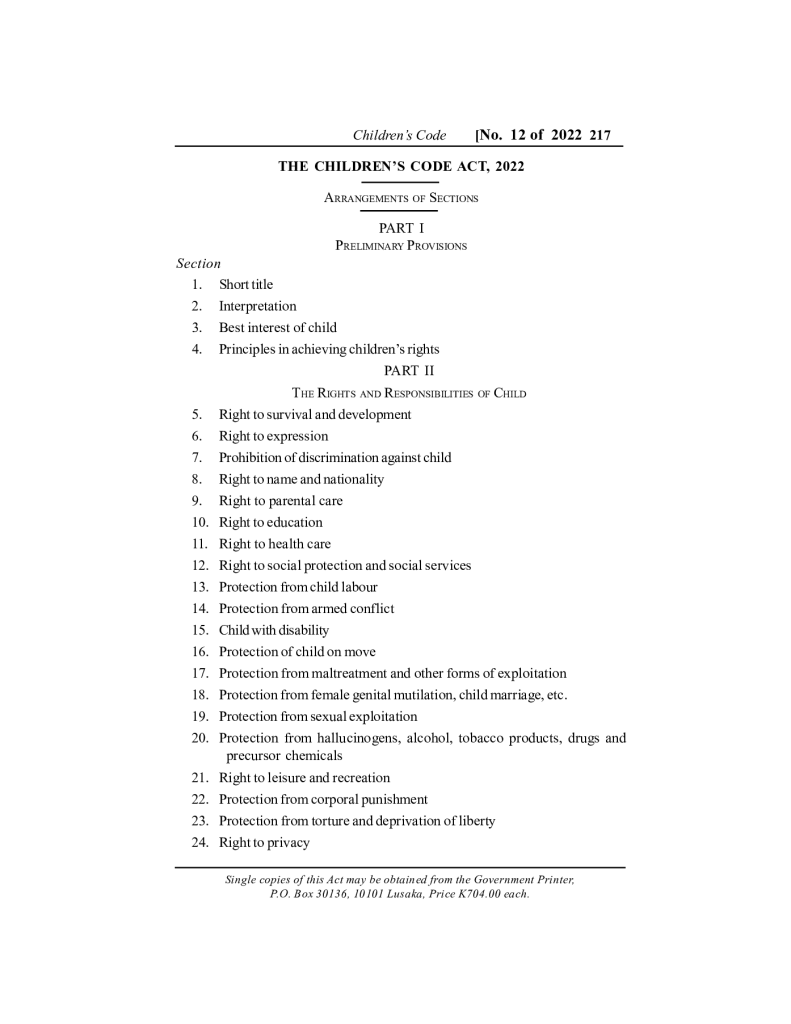
The Children’s Code Act, 2022 consolidates and modernizes laws relating to children by making comprehensive provision for the rights of the child, parental responsibilities, alternative care arrangements such as guardianship, foster care, and adoption, and the protection of children in need of care or in conflict with the law. The Act further provides for the regulation and delivery of child welfare services, establishes the National Child Development Council, and aims to ensure the holistic development, protection, and participation of every child in Zambia.